
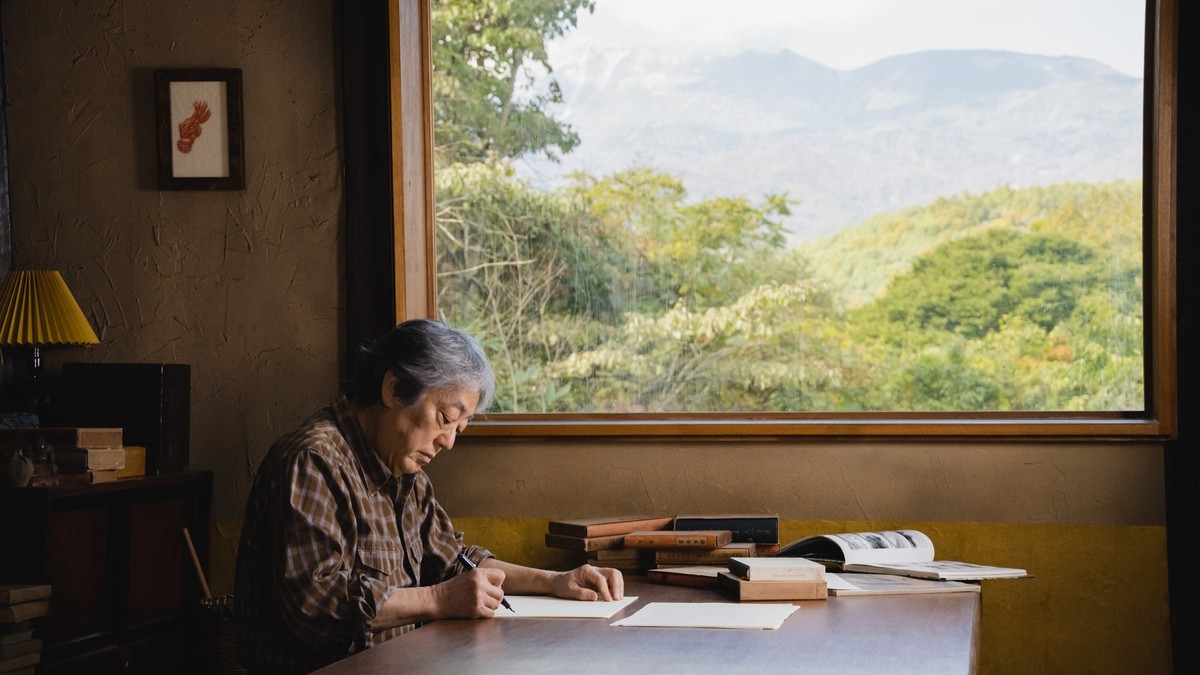
 Much creative work is solitary and/or lonely. The act of trying to create something that no one has ever seen or said before is something that has to be done alone, by definition. Even while working in teams or with a collaborative partner, you must still extract your thoughts and ideas and give them form. No one can that for you.
Since we are all unique individuals, with different memories, skills, knowledge, and personalities, no other person can understand the nuances of how we think and feel about things. More importantly, the lack of telepathy or brain-to-machine interfaces makes creative output a solitary experience. For many people, the solitude and invisibility of the creative process can cause feelings of loneliness, isolation, and sadness.
Hugh MacLeod on the loneliness and risks of creative work
Hugh MacLeod is a cartoonist and writer who has been a big influence on my thinking during the past three years. He wrote some choice words about creative work in his book Ignore Everybody. One of the underlying themes of his work, which you see echoed by other successful creators, is the pain involved in doing creative work. He does not make it look glamorous or easy; sacrifice is clearly required to do the undone.
Solitude is part of the pain that Hugh refers to. Just look at the title of his book. His first key to being creative is to ignore other people’s advice because they can’t really understand what you are doing or what you are going through. Therefore, their advice will usually be useless.
The theme of being alone and suffering through pain continues on with some of the chapter headings from Ignore Everybody:
- Good ideas have lonely childhoods
- If you accept the pain, it cannot hurt you
- Nobody cares. Do it for yourself.
Bothered yet? Here are a couple of additional quotes that might put you over the edge:
The price of being a sheep is boredom. The price of being a wolf is loneliness. Choose one or the other with great care.
Nobody suddenly discovers anything. Things are made slowly and in pain.
Other thoughts on the necessary loneliness of creative work
A few writers have weighed in on loneliness in creative work:
Ernest Hemmingway
Writing, at its best, is a lonely life. Organizations for writers palliate the writer’s loneliness, but I doubt if they improve his writing. He grows in public stature as he sheds his loneliness and often his work deteriorates. For he does his work alone and if he is a good enough writer he must face eternity, or the lack of it, each day.
Stephen King
Writing fiction, especially a long work of fiction, can be a difficult, lonely job; it’s like crossing the Atlantic Ocean in a bathtub. There’s plenty of opportunity for self-doubt.
Anne Lamott
Being a writer guarantees that you will spend too much time alone – and that as a result, your mind will begin to warp.
Solitude vs. loneliness during creative work
I’m making a big deal out of this, but it’s important to acknowledge that solitude and loneliness can be a huge part of the creative process. I won’t even go into pain. Suffice it to say that when you’ve had to rip up a drawing for the umpteenth time, rewrite paragraphs or sentences endlessly, or pick up something and rebuild it AGAIN after it falls down AGAIN, you will understand pain. I expect that you understand that already.
Solitude and loneliness are different things, of course.
Solitude is when you are physically apart from other people. Loneliness is the pain we feel when there’s no one to talk to or touch. Loneliness also appears when we are unable to connect with anyone on an emotional or spiritual level even when we are not alone.
Solitude is not always painful. Loneliness always seems to be.
Being creative means being used to being alone while you work. Some of us prefer some solitude because it means we won’t be interrupted while we work! It’s hard enough to squeeze something new out of your head onto another medium when no one is bothering you; distractions make the process exponentially harder.
But the feeling of loneliness… well, that’s a hard one.
Why creative work must be a solitary pursuit
After all, when you’re doing creative work, you’re the only one who can make it come to life. No one else can fish stuff out of your subconscious. Only you can perform the idle musing, free association, pattern recognition, and creative thinking that will produce the art that only you can produce: that which is yours and yours alone.
Other people… unless they really understand you and what you’re trying to do, they tend to produce more noise than the signal that you’re trying to receive and process when you’re doing creative work.
Unless you’re really talented at collaborating with other people, you will be forced to do a big chunk of creative work alone.
That may or may not be a bad thing.
Is loneliness a form of emotional self-sabotage?
Isolation can be tough – thankfully it’s temporary most of the time unless you’re J.D. Salinger, in which case isolation is persistent because it’s what you wanted. For those of us who aren’t so comfortable with long stretches of solitude, the lack of contact or having no one to listen to you is painful.
It’s possible, though, that loneliness is just another expression of what Seth Godin calls The Resistance in his book Linchpin. The Resistance is what Seth refers to as fear of change or risk, which comes the part of our vestigial Lizard Brain called the amygdala. This fear of change jumps in at the amygdala’s command and tries to put the brakes on our attempts to do good new creative work.
And isn’t loneliness at least partially fear-based, a feeling that we may be alone for a long time? Could feelings of loneliness serve as an emotional self-sabotage that threatens to derail our creative work because it can change our lives?
Or is it just part of the human experience?
How to handle loneliness during creative work
In my experience, there only seems to be three possible solutions to the loneliness problem:
- Accept the pain and/or use it
- Find thoughtful collaborators to mitigate loneliness without interfering with your work
- Go do something else to do
Let’s look at these for a moment.
Accept the pain and/or use it
Theoretically, you should be able to get used to being alone. A lot of creative people seem to prefer solitude because it removes distractions. The question is… how much can you take?
Can you turn off the feelings of loneliness? My personal experience says that no, you can’t. At best you can ignore the lonelies or you can distract yourself so that you don’t notice the fact that you are lonely.
Can you convert your feelings to something useful? I think it’s possible. I’m sure that there are many creatives who have turned their feelings of loneliness and isolation into art. Apparently it worked for Emily Dickinson, the Bronte sisters, etc. Is it a good way to live? Only you can answer that question for yourself.
Should you treat feelings of loneliness the way that you would treat fear? Or sadness? Should you just accept loneliness as a natural barrier that your mind erects to prevent change? Then do you just need to figure out how to press on through?
Find thoughtful collaborators to mitigate loneliness without interfering with your work
Isn’t this what artist co-ops, studios, and co-working spaces are all about?
I’ll be honest, I have very little experience with this kind of working arrangement, other than some comedy and creative writing pieces that I’ve done with an old friend years ago. Sure, I work and collaborate in an office environment, but it’s not the kind of creative work that I’ve been writing about in this post.
Well, OK, that’s not entirely true. Thoughtwrestling is turning out to be a great platform for collaboration; our ka-tet is a great group. However, it’s an entirely virtual team made up of people scattered across North America. It doesn’t really ease the feelings of physical isolation, but it does provide a bit of an emotional and spiritual connection that helps. Forums, mastermind groups, etc. can help provide this kind of support.
Go do something else to do
This is the least desirable scenario in my opinion. If you have a creative urge, it is a horrible, horrible shame to pass it up because you can’t stand time by yourself. Make the best of working with distractions or else get some collaborators to help reinforce you if you want to realize your creative dreams.
But, if you decide that the price of solitude is too high for you, it’s better to accept that up front instead of embarking on a journey that’s wrong for you.
If you do creative work, does loneliness affect you? If so, how do you deal with that? Conversely, if creative work doesn’t make you feel lonely, why do you think that is?
Subscribe to Thoughtwrestling so you can read more great ideas about creativity, problem solving, and getting things done.
Image by pedrosimoes7

Related posts: